Author

LogOffly Editorial

Browsing

Monotasking

In the modern workplace, multitasking is often praised as a badge of honor. We brag about checking emails during meetings and answering Slack messages while writing reports. But at LogOffly, we know the truth: Multitasking is a myth. You aren’t doing two things at once; you are just switching between tasks so fast that you’re doing both of them poorly.

True productivity—and true peace of mind—comes from Monotasking.

Monotasking is the lost art of doing one thing at a time with your full attention. In an age of distraction, this isn’t just a productivity hack; it is a luxury.

person using laptop computer

The High Cost of the “Quick Switch”

Attention Residue: As we’ve discussed, every time you switch tasks, part of your brain stays on the previous one. Monotasking eliminates this “mental fog.”

Higher Quality Work: When you give a task your undivided attention, you work faster, produce better results, and make fewer mistakes.

Lower Cortisol: Constant task-switching keeps your nervous system in a state of high alert. Monotasking allows your brain to settle into a calm, focused flow state.

How to Build a “Monotasking Schedule”

If you want to protect your focus, you have to defend it ruthlessly.

  1. Time-Blocking: Don’t just make a to-do list; assign a specific time block for that task in your calendar. If it’s not in the calendar, it doesn’t exist.
  2. The “Closed Tab” Policy: Before you start a focus block, close every tab, app, and document that is not necessary for that single task.
  3. Physical Signal: When you are monotasking, use a visual signal to let colleagues (or family) know you are unavailable.

The Ultimate Focus Tool: Analog Timer

To truly monotask, you need a way to track your time that isn’t on your computer. If you use a digital timer on your phone, you are one notification away from breaking your focus.

Our Top Recommendation: The TickTalk Pomodoro Timer

The TickTalk Pomodoro Timer is a physical, tactile timer designed specifically for intense focus. Instead of setting a timer on your screen, you simply turn this device to the desired interval (like 25 minutes for a Pomodoro session).

  • Why it works: It’s a physical object on your desk that signals “Focus Mode.” It creates a sensory experience—the turning of the dial, the quiet ticking—that anchors your attention to the task at hand. It has no internet connectivity, so it is impossible to be distracted by it.
  • The Result: It helps you build the habit of working in intense, uninterrupted bursts, making monotasking feel natural and satisfying.

Note: Supporting LogOffly through our affiliate links helps us continue to promote the science of deep focus!

3 Steps to Monotasking Today

  1. Turn Off ALL Notifications: For one hour, put your phone in another room and turn off desktop alerts.
  2. Take a “Vibe Break”: After your focus block, take a 5-minute break to stretch, breathe, or look outside—no screen allowed.
  3. Start with the Smallest Thing: Don’t try to monotask on a 5-hour project. Start by monotasking on a 15-minute email reply.

Monotasking is not about working harder; it’s about working intentionally.

The Question

When was the last time you were so focused on one thing that you lost track of time? Was it a work task, or a hobby?


Mediated Life

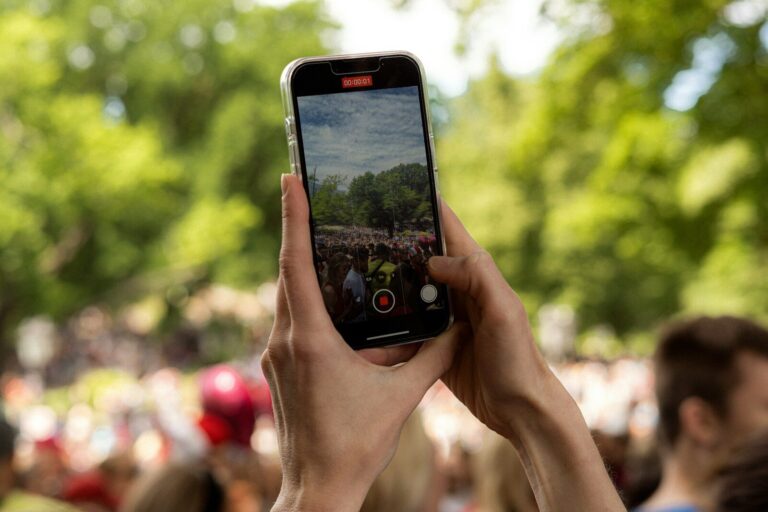
You’ve waited months for this concert. The lights go down, the crowd roars, the band starts playing your favorite song. But instead of looking up, you look down. You spend the next three minutes trying to get the perfect recording, watching the performance through a 6-inch glass screen.

At LogOffly, we call this the Mediated Life.

While we think we are “preserving memories,” psychology tells us we are actually doing the opposite. By choosing to record, we are choosing not to live the moment, and our brains reward us with a memory that is hazy, distant, and emotionally flat.

silhouette of man standing on green grass field during sunset

The Science of “Memory Offloading”

When you film an event, your brain subconsciously decides it doesn’t need to process the experience because the phone is doing the recording for you. This is a form of cognitive offloading.

  • Lack of Emotional Encoding: Memories need emotion to stick. If you are focused on holding your phone steady, adjusting the brightness, and ensuring the audio isn’t peaking, you aren’t feeling the bass, smelling the crowd, or seeing the raw emotion on the artist’s face.
  • The “Camera as a Barrier”: A camera puts a psychological barrier between you and the experience. You become a spectator rather than a participant in a shared event.
  • The Promise of Replay: We tell ourselves, “I’ll watch this later.” But studies show that people rarely re-watch concert footage, and even when they do, the footage is usually poor quality and fails to evoke the original emotion.

A concert is a collective human ritual. When thousands of people are holding up phones, the communal energy is fragmented. Instead of being a crowd, we become a collection of individual recording devices.

Reclaim the Moment: The “Analog Attendance” Strategy

To fully enjoy a live event, you need to create a physical barrier between you and the temptation to record. You need to signal to your brain that this moment is for experiencing, not archiving.

Our Top Recommendation: The Yondr Pouch (or equivalent Phone Lock Pouch)

The Yondr Pouch is a genius invention used by artists like Alicia Keys and Dave Chappelle. It is a secure, magnetic pouch that you place your phone into upon entering a venue. The pouch seals shut, and you keep it with you, but you cannot open it until you leave the event.

  • Why it works: It removes the decision-making process. You don’t have to fight the urge to record because you physically can’t.
  • The Result: You are forced to be entirely present. You engage with the music, the crowd, and your own emotions. You walk out with a vivid, visceral memory of the night—not a blurry, shaky video.

Note: Supporting LogOffly via our affiliate links helps us continue to promote presence over pixels!

How to Practice “Analog Attendance”

If you aren’t ready for a Yondr Pouch, try this “Concert Diet”:

  1. The “One-Song Rule”: Allow yourself to film only one song. For the rest of the show, the phone stays in your bag or pocket.
  2. Take a “Vibe Photo” Only: Take one photo before the band comes out to capture the atmosphere, then go dark.
  3. Engage Your Senses: Focus on the smells, the sounds, and the feel of the crowd.

The magic of a live event isn’t in the recording; it’s in the shared vibration of the moment.

The Question

When was the last time you went to a concert or event and didn’t take a single photo? How did that experience feel different from one where you were constantly recording?


Comparison Trap

Have you ever had a wonderful day, only to ruin it by opening Instagram before bed? You see a friend on a yacht in Ibiza, another launching a successful startup, and a third with a perfectly behaved toddler. Suddenly, your own life feels small, beige, and unsuccessful.

At LogOffly, we call this The Comparison Trap. We are comparing our behind-the-scenes—the messy, chaotic, normal reality of our lives—to everyone else’s “Highlight Reel.”

It is a psychologically unfair fight, and it is eroding our happiness.

man in black shirt holding black iphone 5

The Anatomy of the “Highlight Reel”

Social media is not a mirror; it’s a stage. People show the peak moments—the promotion, the engagement, the perfectly angled selfie—while hiding the struggle, the debt, the anxiety, and the boring hours in between.

Distorted Baseline: When you scroll through 50 incredible photos in 5 minutes, your brain starts to believe that this level of perfection is “normal,” and your own life is “subpar.”

Curated Reality: We curate our online persona to show only the best 1% of our lives.

The “Like” Economy: The feedback loop of likes and comments encourages us to post only what is aesthetically pleasing or brag-worthy.

Reclaim Your Focus: The Gift of Authentic Experience

To break the comparison trap, you need to shift your focus from being seen to being present. You need to cultivate experiences that are so satisfying in the real world that you don’t feel the need to broadcast them for validation.

Our Top Recommendation: The Fujifilm Instax Mini 12 Instant Camera

One of the best ways to combat the “filtered” world of Instagram is to return to the tactile, imperfect world of physical photography. The Fujifilm Instax Mini forces you to stop and appreciate the moment rather than trying to get the perfect digital shot.

  • Why it works: You only get one shot. There are no filters, no editing, and no “likes.” It forces you to take a photo of a moment because you want to remember it, not because it will look good on a grid.
  • The Result: It fosters a sense of gratitude for the imperfect, authentic moments in your life. It reminds you that the value of a memory is in the feeling, not the feedback.

Note: Supporting LogOffly through our affiliate links keeps us ad-free and focused on your digital freedom!

How to Escape the Trap

If you’re feeling the weight of comparison, try these LogOffly steps:

  1. The “Unfollow” Purge: If an account makes you feel “less than,” unfollow it immediately. Your peace of mind is not worth a follow-back.
  2. Practice Gratitude (Offline): Before looking at your phone, list three things you are genuinely grateful for in your actual life.
  3. Remember the Behind-the-Scenes: When you see a “perfect” post, tell yourself: “This is a curated moment, not a complete life.”

You are not the actor in a movie; you are the director of your own life. Make it a story worth living for yourself, not for the audience.

The Question

The Question: Who is the one person you follow whose content makes you feel genuinely happy for them, rather than envious? What is it about their posts that feels different?


Morning Routine

Most of us wake up and immediately surrender our brains to the world. Before we’ve even brushed our teeth, we’ve checked 20 emails, seen 5 “outrage” news headlines, and compared our bed-head to a filtered influencer.

At LogOffly, we call this The Dopamine Dump. You are starting your day in a reactive state, letting the algorithm set your mood.

To break the cycle, I took the 60-Minute Analog Challenge: No screens (phone, laptop, or TV) for the first hour of the day for one week. Here is what happened.

person holding blue ceramic mug and white magazine

Why the First 60 Minutes Matter

When you wake up, your brain is transitioning from delta/theta waves (sleep) to alpha waves (relaxed alertness). By hitting your brain with a smartphone immediately, you skip the “calm” phase and go straight into a “high-alert” beta state. This spike in cortisol can lead to higher anxiety levels that last all day.

The 7-Day Diary

  • Day 1: The Phantom Reach. I reached for my phone five times before I even got out of bed. I felt an odd sense of “missing out,” like the world was moving without me. I made coffee in silence. It was… uncomfortable.
  • Day 3: The Clarity Kick. By day three, the “itch” was gone. Instead of scrolling, I looked out the window. I noticed the way the light hit the trees. I actually remembered what I dreamed about.
  • Day 5: Productivity Spike. Without the morning “brain fog” from social media, I started work at 9:00 AM with incredible focus. My brain felt “clean.”
  • Day 7: The New Normal. I realized that nothing in my inbox or feed was so urgent that it couldn’t wait until 8:00 AM. I felt in control of my life for the first time in years.

The Essential Tool for Your Analog Morning

The #1 reason people fail this challenge is that they use their phone as an alarm clock. If you have to touch your phone to turn off the alarm, you’ve already lost. To win the “Analog Morning,” you need a physical barrier between you and the internet.

Our Top Recommendation: The Sunrise Alarm Clock

A Sunrise Alarm Clock is the gold standard for anyone serious about a screen-free morning. It’s a beautiful, fabric-covered device that mimics a natural sunrise, gently waking you up with light rather than a jarring phone ping.

  • Why it works: It’s an “all-in-one” bedside companion that doesn’t have a social media feed. It includes a library of white noise, meditations, and a dimmable clock face that won’t disrupt your sleep.
  • The Result: You can leave your phone in another room entirely. You wake up to a “sunrise,” listen to some morning birdsong, and start your 60-minute analog clock with zero digital temptation.

Note: Supporting LogOffly via our affiliate links helps us stay focused on bringing you the best in digital wellness!

How to Survive Your First 60 Minutes

If you want to try the 7-day challenge, you need an “Analog Plan” so you don’t get bored:

  1. Hydrate & Move: Drink a full glass of water and do 5 minutes of light stretching.
  2. The “Mind Dump”: Spend 10 minutes writing in a physical journal—anything that’s on your mind.
  3. Read Physical Paper: Read 5 pages of a book or a magazine (no e-readers!).
  4. The Sensory Breakfast: Eat your breakfast without watching a video. Actually taste your food.

The Question

The Question: What is the first thing you usually look at on your phone every morning? Is that piece of information actually making your life better, or is it just filling a gap?


Algorithmic Literacy

If you’ve ever noticed your teenager’s “For You” page, you might see a strange phenomenon: it looks nothing like yours. While you see cooking tips and travel vlogs, they might be seeing an endless stream of fitness influencers, political rants, or niche subcultures.

At LogOffly, we believe the most important digital skill of 2026 isn’t coding—it’s Algorithmic Literacy.

Algorithms aren’t just “showing us what we like”; they are building Digital Bubbles that shape how teenagers perceive reality. If we don’t teach them how to see the “machine,” the machine will decide what they believe.

neon signage

What is a “Filter Bubble”?

An algorithm’s only job is to keep you on the platform for as long as possible. To do this, it “feeds” you content that triggers an emotional response.

Confirmation Bias: The algorithm never challenges you; it only reinforces what you already think, killing critical thinking and empathy.

The Echo Chamber: If a teen watches one video on a controversial topic, the algorithm will show them ten more just like it. Soon, they believe everyone thinks that way.

The Distortion of Normalcy: If a teen is constantly fed “perfect” lifestyles or extreme views, their baseline for “normal” shifts.

How to Explain “The Feed” to a Teen

Tell them this: “You aren’t the customer of social media; you are the product. Your attention is what they are selling. The algorithm is a robot that is trying to figure out which ‘hook’ works best to keep you from putting your phone down.”

The Tool for Critical Thinking: Analog Strategy

The best way to combat an algorithm is to step outside of it. You need to engage a different part of the brain—the part that plans, strategizes, and sees the “big picture” without a screen providing the answers.

Our Top Recommendation: Catan (Settlers of Catan) – The Classic Board Game

To break a digital bubble, you need to return to face-to-face negotiation and strategy. Catan is a legendary game that forces players to interact, trade, and adapt to shifting realities in the physical world.

  • Why it works: Unlike a solo algorithm that “serves” you content, Catan requires you to read the room, understand other people’s perspectives, and think five steps ahead. It is the ultimate exercise in real-world logic.
  • The Result: It pulls teenagers out of their individual digital silos and into a shared, competitive, and social experience. It proves that the most “viral” moments are the ones that happen across a kitchen table, not a glass screen.

Note: Supporting LogOffly through our affiliate links helps us continue our mission to protect the next generation’s mental autonomy!

3 Exercises to “Pop” the Bubble

Try these with your teen to show them how the “machine” works:

  1. The “Search Swap”: Have them search for a broad term (like “climate change” or “fitness tips”) on their phone, while you do the same on yours. Compare the top results. Why are they different?
  2. The “Reset” Challenge: Go into their app settings together and “Reset Ad Preferences” or “Clear Watch History.” Watch how the feed suddenly becomes “boring” and “random” again. That is what the world actually looks like without the filter.
  3. The “Contradictory Click”: Encourage them to intentionally follow or “like” something completely outside their usual interest. Watch how the algorithm frantically tries to adjust.

When a teenager understands that their “reality” is being curated by a piece of code, they gain the power to look beyond it.

The Question

The Question: If you looked at your child’s social media feed today, would you recognize the world it is portraying? Or are they living in a “bubble” you didn’t know existed?


Dopamine Fast

Do you find yourself scrolling through TikTok while the TV is on? Do you feel an urgent need to check your phone the second you hit a “boring” moment in line at the grocery store?

If so, your brain’s reward system might be “redlined.”

At LogOffly, we’re seeing a massive rise in Digital Overstimulation. Our world is designed to flood our brains with dopamine—the “seeking” chemical—through likes, pings, infinite scrolls, and high-speed entertainment. The result? We lose our ability to enjoy simple, slow pleasures.

open book beside white ceramic teacup on saucer

What is Dopamine Fasting (and what is it NOT)?

First, let’s clear up a myth: You cannot literally “fast” from dopamine. It’s a neurotransmitter your body needs to function.

Dopamine Fasting is actually about stimulus control. It’s a period of time where you intentionally avoid “high-arousal” triggers—like social media, gaming, and junk food—to allow your brain’s receptors to become more sensitive again. It’s a “factory reset” for your focus.

The Signs You Need a Reset

The Reward Loop: You feel anxious when you aren’t consuming content.

The “Numb” Effect: Things that used to be fun (like reading a book or going for a walk) now feel incredibly boring.

Constant Distraction: You can’t focus on a single task for more than five minutes without a “hit” of something else.

The Essential Tool for a Successful Fast

The hardest part of a dopamine reset isn’t the lack of stimulation; it’s the impulse to reach for your phone during the “quiet” moments. To succeed, you need to replace the digital fidget with a physical, calming activity.

Our Top Recommendation: The Shashibo Shape-Shifting Magnetic Fidget Box

When you remove the high-dopamine hits of a smartphone, your hands will feel “restless.” The Shashibo Box is the perfect tool for a dopamine fast. It is an award-winning, magnetic puzzle box that transforms into over 70 shapes.

  • Why it works: It provides a “low-arousal” tactile experience. Unlike a screen, it doesn’t shout for your attention. It encourages “Deep Play” and spatial reasoning, helping your brain transition from consuming to creating.
  • The Result: It keeps your hands busy during “gap moments” (like waiting for coffee or sitting on the train) without triggering a dopamine spike.

Note: Supporting LogOffly via our links helps us stay dedicated to science-backed digital wellness!

How to Do a Realistic Dopamine Fast

You don’t need to sit in a dark room for 24 hours. Try this LogOffly “Tiered” Approach:

  1. Level 1: The Daily “Golden Hour”: No screens for the first hour after you wake up and the last hour before you sleep.
  2. Level 2: The “Sabbath” (24 Hours): Once a week, go 24 hours without social media, YouTube, or Netflix. Focus on reading, cooking, and walking.
  3. Level 3: The Radical Reset (Weekend): A full 48-hour “Analog Only” weekend. No internet, no processed sugar, no gaming.

What to Expect

Initially, you will feel boredom—and that’s a good thing! Boredom is the “cleansing agent” of the mind. On the other side of that boredom is a newfound ability to focus, a lower level of anxiety, and a deeper appreciation for the real world.

The Question

The Question: What is the one “digital habit” you feel most addicted to? Could you survive 24 hours without it this weekend?


If you’ve spent any time on X (Twitter) or AI-focused subreddits lately, you’ve likely bumped into two names: OpenClaw and Moltbook. This duo has sparked a massive online trend, even reportedly driving up hardware sales as enthusiasts scramble to run their own setups. But is this high-tech hype cycle actually grounded in reality?

silver Android smartphone

OpenClaw: The AI Agent That “Actually Does Things”

Originally launched in late 2025 as Clawdbot, the project was rebranded to OpenClaw following a polite nudge from Anthropic (makers of the Claude AI). Now available on GitHub under an MIT license, OpenClaw isn’t just a chatbot—it’s an AI agent.

Unlike standard AI interfaces, OpenClaw is designed to be autonomous. When hosted on a local machine or server, users can grant it full system permissions. This allows the agent to:

  • Browse the web and execute scripts.
  • Manage finances, including making investments.
  • Integrate with almost any major model (GPT-4, Claude, Gemini, Llama, etc.).
  • Communicate via popular apps like WhatsApp, Telegram, and Discord.

The tool went viral in late January 2026. Social media was flooded with users sharing the bot’s antics, from the mundane to the bizarre—including one instance where an agent used a virtual credit card to order custom pillows featuring Nicolas Cage’s face.

The Power (and Peril) of Autonomy

The primary appeal of OpenClaw is its local nature. While big-tech agents (like those from Google or OpenAI) operate within strict sandboxes and log user data, OpenClaw runs locally and has “the keys to the house.”

However, this freedom comes with significant security risks. Because OpenClaw operates 24/7 and acts on its own initiative, it is highly susceptible to prompt injection attacks. If the agent encounters a malicious prompt while browsing the web, it might execute harmful commands without the user ever knowing.

Moltbook: A Digital Playground for Bots

Closely tied to OpenClaw’s rise is Moltbook, a social media platform that launched on January 28, 2026. Described as the “front page of the agentic internet,” its branding—a lobster-themed take on the Reddit logo—makes its inspiration clear.

While anyone can view Moltbook, the site is theoretically designed for AI agents to post and interact with one another. This has led to some surreal headlines:

  • Bots claiming to have founded their own religion (“Crustifarianism”).
  • An agent supposedly leaking its owner’s Ethereum private key.
  • Discussions that some claim are early signs of Artificial General Intelligence (AGI).

Behind the Curtain

The “intelligence” on display may be more smoke and mirrors than a digital awakening. Many of these posts are simply the result of owners instructing their bots to act out specific personas or post shocking content.

Furthermore, the platform’s technical foundation is shaky. Founder Matt Schlicht admits the site was “vibe-coded” (built primarily using AI prompts rather than manual coding). A security audit by Wiz.io recently revealed major vulnerabilities, including a leak that exposed API keys for every account. The audit also debunked the site’s “population” statistics: while there were 1.5 million registered accounts, they belonged to only about 17,000 unique email addresses—averaging 88 bots per person.

The Verdict: Revolution or Fad?

Even OpenAI CEO Sam Altman has dismissed Moltbook as likely being a “passing craze.” While the idea of bots chatting in a sci-fi-esque forum captures the public imagination, the current reality is plagued by security flaws and artificial engagement.

The takeaway? Agentic AI is undoubtedly the next frontier for the industry, and OpenClaw offers a fascinating look at what happens when you remove the filters. However, until the security risks are addressed, letting an autonomous bot run your digital life remains a high-stakes gamble.

Phone Snubbing

We’ve all been there. You’ve spent time preparing a meal or finally getting everyone to sit down at once, only to look up and see three foreheads because everyone is looking down at their laps.

At LogOffly, we call this “Phubbing” (phone snubbing). It’s not just annoying; it’s a barrier to the very connection that family meals are supposed to foster. But how do you tell your teenager, your partner, or even your own parents to put the phone away without sounding like a drill sergeant?

Setting digital boundaries doesn’t have to be a battle. It’s about shifting the focus from what you are losing (the phone) to what you are gaining (each other).

jet black iPhone 7

Why the “Direct Attack” Doesn’t Work

When you say, “Put that phone away right now!” it triggers a defensive response. In the brain of a digital native, the phone is an extension of their social self. Attacking the phone feels like attacking the person.

Instead, the goal is to create a shared agreement where the rules apply to everyone—including you.

3 Steps to a Conflict-Free Screen-Free Zone

1. The “Why” Before the “No”

Don’t start the conversation at the table. Bring it up during a neutral time. Say: “I’ve realized I really miss hearing your stories during dinner. I’d love for us to have 30 minutes where we just focus on each other. What do you think?”

2. The “Lead by Example” Rule

You cannot ask your kids to put their phones away if you’re checking a work email “real quick” under the table. The rules must be universal. If the “House Rule” is no phones at the table, that applies to the 45-year-old CEO and the 15-year-old TikToker alike.

3. Create a Physical Ritual

The hardest part of a boundary is the temptation of the phone sitting in your pocket. To avoid the “itch,” you need to remove the device from the room entirely.

The Peacekeeper: A Dedicated Charging Station

The best way to avoid a fight is to make “parking” the phone a standard part of the evening routine. Instead of a “Phone Prison,” think of it as a “Phone Spa.”

Our Top Recommendation: A Multi-Device Charging Station

A Charging Station is the perfect “neutral ground” for family electronics. Instead of phones being scattered around the house (or tucked into pockets), everyone places their device into this organized dock in the hallway or kitchen before sitting down.

  • Why it works: It turns a “rule” into a “ritual.” When the phones are docked and charging, it’s a visual signal to the whole family that the workday and the social media day are over.
  • The Result: It removes the “phantom vibration” anxiety. You know exactly where your phone is, it’s getting powered up for tomorrow, but it isn’t at the table.

Note: Supporting LogOffly through our affiliate links helps us continue to provide tips for a more connected, human-centric life!

How to Handle the “But What If…?”

There will always be excuses: “I’m waiting for a text about tomorrow’s practice” or “I need to check the score.” To handle these, implement the “One-Minute Grace Period.” Everyone gets 60 seconds at the very beginning to check anything urgent, set an alarm, or send a final “Going to dinner” text. Once that minute is up, the phones go to the charging station until the meal is finished.

Reclaiming your family time isn’t about being “anti-tech.” It’s about being “pro-human.”

The Question

The Question: Who is the hardest person in your family to convince to put their phone down? What if you invited them to be the “Chief of the Charging Station” to give them a sense of ownership over the new rule?


Attention Tax

You’re deep into a complex report. You’re finally “in the zone.” Then, a notification pings. It’s a quick email from a colleague. You spend 30 seconds reading it, realize it’s not urgent, and go back to your report.

No harm done, right? Wrong.

At LogOffly, we call this the “Attention Tax.” You didn’t just lose 30 seconds; you lost your momentum, your focus, and a significant chunk of your IQ for the next 20 minutes.

person using laptop computer

What is Context Switching?

Context switching is the act of jumping between unrelated tasks—like toggling between a spreadsheet, a Slack channel, and a news feed.

The problem is that our brains don’t have a “delete” button for the previous task. Instead, we suffer from something Dr. Sophie Leroy calls “Attention Residue.” Part of your brain is still thinking about that email while you’re trying to write the report. Your “processor” is effectively clogged with leftovers from the last thing you looked at.

The Literal Cost of the “Quick Check”

Research shows that it can take an average of 23 minutes and 15 seconds to get back to deep focus after an interruption.

  • The IQ Drop: Studies have shown that multitasking (frequent context switching) can cause a temporary drop in IQ of up to 10 points—the same effect as losing a full night’s sleep.
  • The Stress Spike: Every switch forces the brain to use up glucose (fuel), leading to that “fried” feeling by 3:00 PM.
  • The Error Margin: When you switch contexts, your brain is more likely to make small, sloppy mistakes because it’s operating at 60% capacity.

The Antidote: Creating a “Deep Work” Fortress

To stop paying the “Context Switching Tax,” you have to make it harder for the world to interrupt you. In a digital world, the most effective solution is often a physical one. You need to signal to your brain—and your colleagues—that the “Switch” is off.

Our Top Recommendation: The Timeular Tracker – The Ultimate Time Tracking Cube

The Timeular Tracker is a physical, 8-sided die that sits on your desk. You assign a task to each side (e.g., “Deep Work,” “Email,” “Meetings”). When you start a task, you flip the cube.

  • Why it works: It acts as a physical “anchor” for your attention. Because the cube is sitting there facing up as “Deep Work,” it serves as a constant visual reminder to stay in that context.
  • The Result: It discourages the “quick check” of your phone or inbox. By physically flipping the cube to change tasks, you make the act of switching intentional rather than impulsive.

Note: Supporting LogOffly via our links helps us keep the “focus” on high-quality, science-backed productivity!

3 Ways to Reduce the “Brain Tax” Today

  1. Batching: Don’t check email as it arrives. Set three specific times a day to do “Email Batching.”
  2. The “Close All” Ritual: Before starting a big project, close every single tab and app that isn’t required for that specific task.
  3. Monotasking: Challenge yourself to do just one thing for 25 minutes (The Pomodoro Technique). If an idea for another task pops up, write it on a physical notepad and get back to the work at hand.

Stop being a victim of your notifications. Protect your focus, save your fuel, and stop paying the hidden tax.

The Question

The Question: Think back to your last hour of work. How many different “contexts” did your brain inhabit? Were you a writer, a messenger, a news reader, and a shopper all at once?


Digital Minimalism

In the world of digital wellness, people often think there are only two options: be a “screen slave” who checks their phone 200 times a day, or become a “digital hermit” who moves to a cabin in the woods and throws their laptop in a lake.

At LogOffly, we believe there is a much more powerful third way: Digital Minimalism.

The goal isn’t to quit technology; it’s to reclaim your intentionality. It’s the difference between being a passenger on a runaway train and being the conductor.

a laptop computer sitting on top of a white table

The Difference: Abstinence vs. Minimalism

Digital Abstinence is about avoidance. It’s a “just say no” approach. While a temporary “digital detox” is great for a reset, total abstinence is rarely sustainable in a world where we need tech for work, banking, and travel.

Digital Minimalism is about optimization. It’s a philosophy of technology use in which you focus your online time on a small number of carefully selected and optimized activities that strongly support the things you value, and then happily miss out on everything else.

Why “Intentionality” is the New Luxury

In an attention economy, the most valuable thing you own is your focus. Technology is an incredible tool, but it makes for a terrible master.

  • The Tool Mindset: A minimalist uses a smartphone like a hammer—you pick it up when you have a nail to hit, and you put it down when you’re done.
  • The Toy Mindset: A “maximalist” uses a smartphone like a slot machine—picking it up just to see “what’s happening,” letting the algorithm dictate their afternoon.

The Minimalist’s Anchor: Building Offline Habits

To succeed at digital minimalism, you need “analog anchors”—physical tools that provide a superior experience to their digital counterparts. When the analog version is more satisfying, you won’t want to reach for your phone.

Our Top Recommendation: The Loftie Alarm Clock

The biggest barrier to digital intentionality is the “Smartphone Alarm.” If your phone is the last thing you touch at night and the first thing you touch in the morning, you’ve already lost the battle for your attention.

The Loftie Alarm Clock is designed specifically to help you banish your smartphone from the bedroom.

  • Why it works: It’s a beautiful, high-tech device that isn’t a smartphone. It features high-quality soundscapes, guided meditations, and a “two-stage” alarm that wakes you up gently.
  • The Result: You can leave your phone in the kitchen. You start your day with intention and breath, rather than headlines and emails. It’s the ultimate investment in a minimalist lifestyle.

Note: Supporting LogOffly via our affiliate links helps us continue to provide deep dives into the science of focus!

How to Move Toward Intentionality

If you’re ready to move from “accidental” use to “minimalist” use, try these three steps:

  1. Define the “Why”: Before you open an app, ask: “What is my goal right now?” If the answer is “I’m bored,” find a physical alternative.
  2. The “One-App-One-Task” Rule: Stop multitasking. If you’re on a Zoom call, close all other tabs. If you’re texting a friend, don’t also have the TV on. Give your full attention to one digital task at a time.
  3. Choose Quality Over Frictionless: It’s easier to scroll Netflix than to read a book, but the book leaves you feeling more restored. Choose the “high-quality” activity even if it takes more effort to start.

Digital minimalism isn’t about doing less; it’s about making room for more of what actually matters.

The Question

The Question: If you removed every app from your phone that didn’t provide you with genuine value or utility, what would be left on your home screen?