Tag

Slider

Browsing

Morning Routine

Most of us wake up and immediately surrender our brains to the world. Before we’ve even brushed our teeth, we’ve checked 20 emails, seen 5 “outrage” news headlines, and compared our bed-head to a filtered influencer.

At LogOffly, we call this The Dopamine Dump. You are starting your day in a reactive state, letting the algorithm set your mood.

To break the cycle, I took the 60-Minute Analog Challenge: No screens (phone, laptop, or TV) for the first hour of the day for one week. Here is what happened.

person holding blue ceramic mug and white magazine

Why the First 60 Minutes Matter

When you wake up, your brain is transitioning from delta/theta waves (sleep) to alpha waves (relaxed alertness). By hitting your brain with a smartphone immediately, you skip the “calm” phase and go straight into a “high-alert” beta state. This spike in cortisol can lead to higher anxiety levels that last all day.

The 7-Day Diary

  • Day 1: The Phantom Reach. I reached for my phone five times before I even got out of bed. I felt an odd sense of “missing out,” like the world was moving without me. I made coffee in silence. It was… uncomfortable.
  • Day 3: The Clarity Kick. By day three, the “itch” was gone. Instead of scrolling, I looked out the window. I noticed the way the light hit the trees. I actually remembered what I dreamed about.
  • Day 5: Productivity Spike. Without the morning “brain fog” from social media, I started work at 9:00 AM with incredible focus. My brain felt “clean.”
  • Day 7: The New Normal. I realized that nothing in my inbox or feed was so urgent that it couldn’t wait until 8:00 AM. I felt in control of my life for the first time in years.

The Essential Tool for Your Analog Morning

The #1 reason people fail this challenge is that they use their phone as an alarm clock. If you have to touch your phone to turn off the alarm, you’ve already lost. To win the “Analog Morning,” you need a physical barrier between you and the internet.

Our Top Recommendation: The Sunrise Alarm Clock

A Sunrise Alarm Clock is the gold standard for anyone serious about a screen-free morning. It’s a beautiful, fabric-covered device that mimics a natural sunrise, gently waking you up with light rather than a jarring phone ping.

  • Why it works: It’s an “all-in-one” bedside companion that doesn’t have a social media feed. It includes a library of white noise, meditations, and a dimmable clock face that won’t disrupt your sleep.
  • The Result: You can leave your phone in another room entirely. You wake up to a “sunrise,” listen to some morning birdsong, and start your 60-minute analog clock with zero digital temptation.

Note: Supporting LogOffly via our affiliate links helps us stay focused on bringing you the best in digital wellness!

How to Survive Your First 60 Minutes

If you want to try the 7-day challenge, you need an “Analog Plan” so you don’t get bored:

  1. Hydrate & Move: Drink a full glass of water and do 5 minutes of light stretching.
  2. The “Mind Dump”: Spend 10 minutes writing in a physical journal—anything that’s on your mind.
  3. Read Physical Paper: Read 5 pages of a book or a magazine (no e-readers!).
  4. The Sensory Breakfast: Eat your breakfast without watching a video. Actually taste your food.

The Question

The Question: What is the first thing you usually look at on your phone every morning? Is that piece of information actually making your life better, or is it just filling a gap?
Notification Fast

We’ve become Pavlov’s dogs. Every time our pocket buzzes with a “like,” a news alert, or a promotional email, we reflexively reach out. We think we’re staying “informed,” but in reality, we’re suffering from Continuous Partial Attention.

At LogOffly, we believe the fastest way to lower your cortisol and regain your focus is a radical intervention. We call it the 30-Day Notification Fast.

The rules are simple: For the next month, you turn off every single push notification on your phone, with only two exceptions: Phone Calls and Text Messages (SMS/WhatsApp) from actual humans.

a woman holding a cell phone in her hand

Why 30 Days?

It takes roughly 21 to 66 days to prune old neural pathways and build new ones.

Week 1 (The Withdrawal): You will feel “phantom vibrations.” You’ll check your phone constantly, fearing you’ve missed something.

Week 2 (The Calm): The phantom pings fade. You start to notice the world around you more. Your “input anxiety” begins to drop.

Week 3 & 4 (The Mastery): You realize that 99% of what you thought was “urgent” was actually just “noise.” You start opening apps when you want to, not when they command you to.

What Stays and What Goes?

❌ THE NOISE (Turn OFF): Social media likes/comments, News alerts, Email pings, Game invites, Shopping “deals,” and YouTube “New Video” alerts.

✅ THE ESSENTIALS (Stay ON): Direct phone calls and direct messages from friends/family/colleagues.

The Secret Weapon for a Successful Fast

The hardest part of a Notification Fast is the temptation to “just check” the apps manually. If you find yourself mindlessly opening Instagram just because you haven’t seen a notification in an hour, you need to create a physical barrier.

Our Top Recommendation: The kSafe Mini (Kitchen Safe) Locking Container

If you want to ensure your “Fast” actually sticks—especially during “Deep Work” hours or family time—the kSafe Mini is a life-saver. It’s a high-quality, BPA-free container with a giant timer on the lid. You put your phone in, rotate the dial, and lock it away for anywhere from 1 minute to 10 days.

  • Why it works: It removes the need for willpower. When your phone is physically inaccessible, the “urge to check” disappears within minutes, allowing your brain to enter a state of deep relaxation or focus.
  • The Result: You’ll find yourself finishing books, having deeper conversations, and finally sleeping without that “blue light” temptation.

Note: Supporting LogOffly through our affiliate links keeps us ad-free and focused on your digital freedom!

How to Prepare for the Fast

Before you flip the switches, do these three things:

  1. Tell Your Inner Circle: Let your close friends and family know: “I’m doing a 30-day digital fast. If you need me urgently, call me. Otherwise, I’ll reply when I check my messages later today.”
  2. Clean Your Home Screen: Move your “temptation apps” (Social media, News) off your first screen and into folders.
  3. Set Your “Check-In” Times: Decide on two times a day (e.g., 12:00 PM and 5:00 PM) when you will manually open your apps to see what you missed.

Are You Ready?

The world won’t end if you don’t know that someone liked your photo within three seconds. But your peace of mind might just begin.

The Question

The Question: Which specific app on your phone is the “loudest” (sends the most notifications)? How would your day change if that app suddenly went silent?


Digital Eye Strain

Digital nomads live the dream: working from cafes in Bali, co-working spaces in Lisbon, or vans in the Alps. But there is a silent side effect to this freedom. When your office is wherever your laptop is, you tend to spend significantly more time staring at high-brightness screens in poorly lit or glare-heavy environments.

The result? Digital Eye Strain (also known as Computer Vision Syndrome). If you experience headaches, blurred vision, or dry, “gritty” eyes by 4:00 PM, your eyes are crying out for a break.

At LogOffly, we believe the 20-20-20 Rule is the most important habit any digital nomad can adopt.

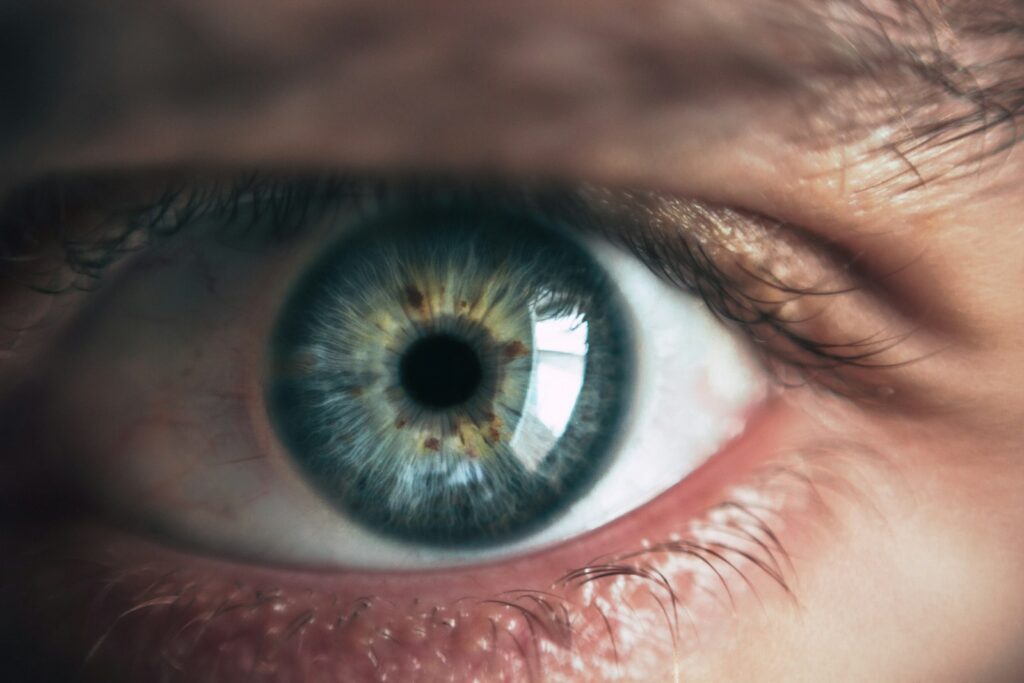
close-up photography of human eye

What is the 20-20-20 Rule?

Developed by optometrist Dr. Jeffrey Anshel, the rule is a simple, rhythmic way to reset your eye muscles and prevent long-term damage:

Every 20 minutes, look at something 20 feet away (approx. 6 meters) for at least 20 seconds.

Why It’s a Game-Changer for Remote Workers

Our eyes were evolved to scan the horizon for movement, not to focus on a fixed point 50 centimeters from our faces for eight hours.

Mental Micro-Rest: These 20-second windows act as “cognitive palate cleansers,” preventing the brain fatigue that comes from intense screen focus.

Relaxing the Ciliary Muscle: When you look at a screen, your eye muscles are constantly “contracted.” Looking 20 feet away allows those muscles to relax.

The Blink Rate Reset: We blink 66% less when looking at screens. A 20-second break encourages your eyes to blink naturally, replenishing the tear film and preventing “Zombie-Eyes.”

The Nomad’s Essential Eye-Care Tool

For a digital nomad, your eyes are your greatest professional asset. Beyond the 20-20-20 rule, the best thing you can do is block the harmful artificial light that keeps your eyes in a state of high-alert.

Our Top Recommendation: Blue Light Blocking Glasses by Cyxus

When you’re working from a sunny beach club or a brightly lit airport lounge, your eyes are battling both screen glare and artificial blue light. Cyxus Blue Light Blockers are the industry standard for nomads who want to look stylish while protecting their vision.

  • Why they work: These glasses filter out the high-energy blue light (HEV) that causes eye fatigue and disrupts your sleep-regulating melatonin.
  • Travel-Ready: They are lightweight, durable, and come with a protective case—perfect for throwing into a backpack between destinations.
  • The Result: Less eye “burning,” fewer screen-induced headaches, and better sleep after a long day of coding or writing.

Note: Supporting LogOffly via our links helps us keep the “nomad spirit” alive. Thank you!

How to Actually Remember the 20-20-20 Rule

Let’s be honest: when you’re “in the zone,” 20 minutes flies by. Here is how to make it a habit:

  1. Use a “Water Trigger”: Every time you take a sip of water, look out the window at something far away.
  2. Visual Cues: If you’re in a cafe, sit facing a window. The distant movement outside will naturally draw your eyes away from the screen.
  3. Desktop Apps: Use a simple timer like Stretchly or EyeLeo that dims your screen every 20 minutes to remind you to look up.

Your eyes are the windows to the world you’re traveling to see. Don’t let a laptop screen blur the view.

The Question

The Question: Look out the nearest window right now. What is the furthest thing you can see? Focus on it for 20 seconds—does your vision feel “sharper” when you look back at this text?


Slow Messaging

We’ve all felt that specific pang of guilt. You see a notification for a non-urgent text message—a friend asking for a recommendation or a cousin sharing a meme. You’re in the middle of something else, so you don’t reply immediately.

Then, the hours turn into days. The longer you wait, the “heavier” the message feels. You start to feel like a bad friend. You feel like you owe an apology.

At LogOffly, we want to tell you: It is time to forgive yourself. Welcome to the Slow Messaging Movement.

woman sitting on sand

The Myth of the Instant Response

The invention of the smartphone created an accidental expectation: because we carry our “mailboxes” in our pockets, we should be available at all times. But just because technology is instant doesn’t mean human thought should be.

Slow Messaging is the belief that:

Presence Matters: If you are playing with your kids, working on a project, or just staring at the clouds, that is more important than a digital ping.

Depth beats Speed: A thoughtful reply after three days is more valuable than a “cool” sent in three seconds.

Availability is a Gift, Not a Right: You are not a public utility. You do not have to be “on” for everyone, all the time.

Breaking the “Urgency” Loop

When we respond to everything instantly, we train our brains to live in a state of high-alert. This constant “micro-switching” prevents us from ever reaching deep focus or true relaxation. By intentionally slowing down your response time, you are training your nervous system—and your social circle—that you are living life on your own terms.

Reclaim Your Focus: The Gift of Analog Time

The biggest obstacle to “Slow Messaging” is the phone sitting on your desk, staring at you. Even if it’s silent, its presence exerts a “cognitive pull” that makes you feel guilty for not checking it. To truly embrace the slow movement, you need to create a dedicated space for your focus.

Our Top Recommendation: The EASEPRESS Desk Organizer

One of the best ways to practice Slow Messaging is to have a “Home for your Phone” that isn’t in your hand or right next to your keyboard. This EASEPRESS Desk Organizer allows you to keep your workspace tidy while giving you a specific slot to “park” your phone.

  • How it helps: By placing your phone in a designated spot across the desk (or in a drawer), you create a physical boundary. You can focus on your book, your work, or your thoughts without the constant visual reminder of “unanswered” messages.
  • The Result: You regain the “sovereignty” of your attention. You check the phone when you are ready, not when it screams for you.

Note: By using our links, you’re helping LogOffly spread the message of intentional living. Thank you!

How to Start “Slowing Down” Without Losing Friends

If you’re worried about being rude, try these small shifts:

  1. The Status Update: Set your WhatsApp or Slack status to: “Focusing. Slow to reply, but I’ll get back to you soon!”
  2. Voice Notes over Texts: If you don’t have time to type, send a 30-second voice note when you’re walking. It’s more personal and often faster.
  3. The Sunday Catch-Up: Save all non-urgent “life admin” messages for a specific block of time on the weekend. Reply to everyone at once when you have the mental energy to actually connect.

A true friend doesn’t want your “instant” attention; they want your “real” attention. Wait until you have it to give.

The Question

The Question: Who is the one person in your life who always respects your “slow” replies? How does that friendship feel different compared to the ones that demand an instant “ping”?


Digital Amnesia

When was the last time you memorized a phone number? Or navigated a new city without a GPS? Or felt the need to remember a historical date, knowing that the answer was only three clicks away?

At LogOffly, we are fascinated by how technology reshapes our biology. One of the most significant shifts is a phenomenon known as Digital Amnesia—the tendency of our brains to forget information that can be easily found online.

As we outsource our memories to our smartphones, we have to ask: Is our general knowledge shrinking because we’ve made Google our external hard drive?

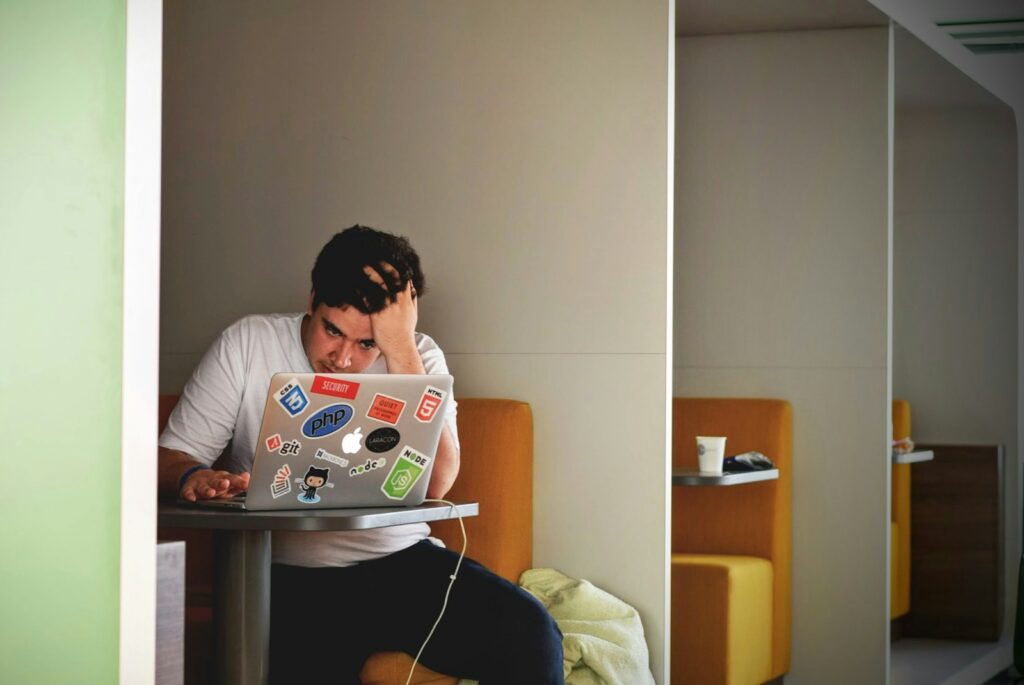
man wearing white top using MacBook

The “Google Effect” and Cognitive Offloading

Psychologists call this “Cognitive Offloading.” When our brains know that information is stored externally (in a cloud, a spreadsheet, or a search engine), they intentionally decide not to store that information in our long-term memory.

A famous study published in Science found that people were less likely to remember what a piece of information was, but were highly likely to remember where they could find it again. We aren’t learning facts anymore; we are learning file paths.

Why This Matters for Your Brain

You might think, “Why does it matter if I don’t remember facts as long as I can find them?” But memory is the foundation of critical thinking.

  • Connection Building: To be creative and solve complex problems, your brain needs a “database” of internal knowledge to make connections. You can’t connect the dots if your brain is empty.
  • Brain Plasticity: Like a muscle, your memory needs exercise. If we stop memorizing, we stop strengthening the neural pathways responsible for retention.
  • Contextual Understanding: Knowing about a topic is different from knowing where to find it. True wisdom requires an internalized understanding of the world.

Reclaim Your Focus: The Power of Paper

If you want to fight Digital Amnesia, you need to start “onboarding” information again. Research consistently shows that we remember information much better when we write it down by hand compared to typing it. Hand-writing engages more areas of the brain, creating a stronger “memory trace.”

Our Top Recommendation: The Rocketbook Core Reusable Smart Notebook

The Rocketbook Core is the perfect bridge for the digital minimalist. It gives you the tactile, memory-boosting experience of writing on paper with a real pen, but allows you to scan and send your notes to the cloud if you need a digital backup.

  • How it helps: By writing your thoughts, meeting notes, or daily goals by hand, you improve your focus and retention.
  • Sustainable: You can wipe the pages clean with a damp cloth and use it forever.
  • Intentional: It encourages you to slow down and process information rather than just mindlessly “copy-pasting.”

(Note: As an Amazon Associate, LogOffly earns from qualifying purchases. This supports our research into digital wellbeing!)

Exercising Your “Memory Muscle”

To live LogOffly is to trust your own mind again. Try to memorize your grocery list today. Try to find your way to a meeting without opening Maps. Give your brain the chance to work, and you’ll find that your focus and mental clarity return in a way that no search engine can provide.

The Question

The Question: If the internet went down for 24 hours, how much of your daily life—your schedule, your contacts, your knowledge—would you still have access to?


FOMO

We’ve all felt it. That sharp, anxious tug in the pit of your stomach when you see photos of a party you didn’t attend, or a “breaking news” alert about a topic everyone is suddenly discussing.

This is FOMO (Fear of Missing Out). It is a byproduct of the digital age—a constant, nagging feeling that somewhere, someone is having a better time, making more money, or staying more “informed” than you.

But what if we flipped the script? What if, instead of fearing what we miss, we started celebrating it? Welcome to the world of JOMO: The Joy of Missing Out.

man sitting on armchair near table with opened coconut

What is JOMO?

JOMO is the emotionally intelligent antidote to FOMO. It is the brave, intentional act of saying “no” to the digital noise so you can say “yes” to yourself. JOMO isn’t about being antisocial or out of the loop; it’s about choosing depth over breath.

When you embrace JOMO, you stop trying to keep up with the infinite scroll and start focusing on the finite, beautiful things right in front of you.

Why JOMO is Essential for Your Mental Health

Not all Our brains were never designed to process the lives of 500 “friends” and the world’s tragedies simultaneously 24/7. This constant stream of information leads to decision fatigue and “comparison trap” anxiety.

Choosing JOMO allows you to:

Deepen Real Connections: You trade 100 shallow digital interactions for one meaningful, face-to-face conversation.

Reclaim Your Time: Every “no” to a pointless notification is a “yes” to a hobby, a book, or a rest.

Boost Mental Clarity: Without the constant comparison, you can actually hear your own thoughts.

How to Practice the Art of Missing Out

Transitioning to JOMO doesn’t happen overnight. It requires a shift in habits:

  1. Curate Your Inputs: Unfollow accounts that make you feel “less than.” Your feed should inspire you, not drain you.
  2. Practice “Selective Ignorance”: You don’t need to have an opinion on every trending topic. It is okay—and actually healthy—not to know what happened on Twitter this morning.
  3. Find Joy in the Analog: Trade your evening scroll for a ritual that doesn’t involve a screen. Cook a meal, go for a walk, or simply sit in silence.

The Power of Being “In the Dark”

There is a profound peace in realizing that the world keeps turning even when you aren’t watching it through a 6-inch screen. JOMO is the ultimate form of self-care because it proves that you are enough, exactly where you are, without needing to see what everyone else is doing.

The Question

The Question: Think of the last time you intentionally stayed away from social media for a day. What is one thing you “missed” that you were actually glad you didn’t have to deal with?


Digital Minimalism

We spend hours every year tidying our physical homes. We organize our closets, donate old clothes, and clear our desks to find mental clarity. But what about the “home” we carry in our pockets?

Most of us are living in a state of digital clutter. Our phones are packed with apps we don’t use, notifications we don’t need, and icons that trigger subconscious stress the moment we unlock our screens.

If you want to reclaim your focus, it’s time to apply the Marie Kondo method to your digital life. It’s time for the LogOffly Digital Minimalism Challenge.

person writing on a book

Step 1: The Great App Audit

The first step isn’t about deleting everything; it’s about evaluation. Go through every single app on your phone and ask yourself one simple question:

“Does this app serve a vital purpose or bring me genuine joy?”

If the answer is “It just kills time,” “I might need it one day,” or “It makes me feel anxious,” it’s a candidate for deletion. Be ruthless. If you haven’t opened it in the last 30 days, you likely don’t need it.

Step 2: Identify the Energy Vampires

Not all apps are created equal. Some are tools (Maps, Banking, Utilities), while others are vampires (infinite-scroll Social Media, News alerts, addictive Games).

  • Tools work for you.
  • Vampires make you work for them.

Try moving your “Energy Vampires” off your home screen and into folders, or better yet, delete the app and access them only via your mobile browser. This small friction creates a “speed bump” that stops mindless scrolling.

Step 3: Curate Your “Quiet” Home Screen

A minimalist home screen should be a place of calm. Aim for a layout that only shows your 4 to 8 most essential, “joy-sparking” apps.

Disable badges: Those little red circles are designed to trigger a stress response. Turn them off for everything except perhaps your phone and calendar.

Use a minimalist wallpaper: A solid color or a calm landscape.

The Result: Digital Intentionality

By decluttering your phone, you are clearing the path to your own attention. When you pick up your device, you should be doing so with intent, not out of a habit of escaping boredom.

Your phone should be a tool that enhances your life, not a cluttered closet that weighs you down.

The Question

The Question: If you had to delete every app on your phone except for three, which three would you keep—and why do those spark the most joy for you?


Deep Work

In the modern economy, we are rewarded for what we produce. Yet, most of our workdays are spent in a state of “fragmented attention”—a shallow sea of emails, Slack pings, and quick “syncs.”

As the world gets noisier, a specific skill is becoming increasingly rare and, therefore, incredibly valuable: Deep Work. Coined by author and professor Cal Newport, Deep Work is the ability to focus without distraction on a cognitively demanding task. It is the state where your brain pushes its limits, masters complicated information, and produces elite-level results.

white printer paper on brown wooden table

The Shallow Work Trap

Most of us spend our days in “Shallow Work.” These are non-cognitively demanding, logistical-style tasks, often performed while distracted. While they keep us busy, they don’t move the needle.

The problem? You cannot do Deep Work if you check your phone every ten minutes. Every time you switch tasks, a part of your attention stays behind with the previous task. This is called Attention Residue. It takes your brain up to 20 minutes to fully refocus after a single “quick check” of your inbox.

Why Depth is a Competitive Advantage

We are moving toward an economy that automates the “shallow.” If your job can be done while distracted, a machine will eventually do it. What a machine cannot do is synthesize complex ideas, create original art, or solve high-level strategic problems.

The ability to concentrate for 3 to 4 hours straight is becoming a “superpower.” If you can cultivate the discipline to go deep while everyone else is distracted by the latest trending topic, you will become indispensable.

How to Practice Depth

Deep Work is not a habit you just “switch on.” It is a muscle you must train.

  • Schedule the Deep: Don’t wait for “free time.” Block 90-minute chunks in your calendar specifically for deep tasks.
  • Quit “Social” by Default: You don’t need to be reachable 24/7. Turn off all non-human notifications.
  • Embrace Boredom: If you train your brain to seek a dopamine hit the moment you feel a hint of boredom, you will never be able to handle the “hard” parts of deep concentration.

The future belongs to those who can focus in a world designed to distract them.

The Question

The Question: When was the last time you spent at least two hours working on a single task without checking your phone or email once?


Just a glance..?

Imagine this: You’re out for dinner with someone you love. The lighting is perfect, the food is delicious, and the conversation is just getting deep. Then, it happens. A notification lights up their screen. They don’t even pick it up—they just glance down for a split second.

In that heartbeat, the connection is severed. You were sharing a moment; now, you’re competing with a piece of glass.

This isn’t just a modern annoyance. It has a name: Phubbing—a blend of “phone” and “snubbing.” And it is quietly acting as a wrecking ball for our closest relationships.

man and woman holding hands

The Psychology of the “Snub”

Phubbing is the act of ignoring the person in front of you in favor of your smartphone. While it might seem harmless, our brains perceive it as a form of social exclusion.

When you “phub” someone, you are sending a subconscious message: “What is happening on this screen is more important than you.” Research shows that even the mere presence of a smartphone on a table—even if it’s turned face down—lowers the quality of a conversation and decreases the level of empathy felt between two people.

Why We Do It (and Why It Hurts)

We don’t usually phub to be rude. We do it because of FOMO (Fear Of Missing Out) or the dopamine hit of a new notification. However, the cost is high. Constant phubbing leads to:

The “Mirroring” Effect: Phubbing is contagious. When one person pulls out their phone, the other feels awkward or ignored, so they pull out their phone to compensate. Soon, you aren’t “together” anymore; you’re just two people scrolling in the same zip code.

Decreased Relationship Satisfaction: Partners who phub each other report more conflict and lower levels of intimacy.

Reclaiming the Table

To live LogOffly doesn’t mean banning phones forever, but it does mean creating “sacred spaces.” Reclaiming your relationships starts with a simple boundary: The Phone-Free Zone. Whether it’s a first date or a Tuesday night dinner, try leaving the phone in another room or inside a bag. When you remove the distraction, you give the person across from you the most valuable gift you own: your undivided attention.

The Question

The Question: Have you ever felt “second best” to a smartphone during a conversation? Or more importantly—when was the last time you were the one doing the phubbing?


Logged Off?

Do you remember the last time you sat on a train and simply stared out the window? Or stood in line at a grocery store, observing the people around you, lost in your own thoughts? Not too long ago, these moments of “nothingness” were a natural part of our day. Today, they have almost entirely vanished. The second a moment of stillness creeps in, we reach for our pockets. We check a notification, scroll through a feed, or play a quick game. We have effectively declared war on boredom.

But in winning that war, we might be losing something far more precious: our creativity.

person holding book with sketch

The “Default Mode” of the Brain

Science tells us that when we are bored, our brains aren’t actually “off.” In fact, they enter what researchers call the Default Mode Network (DMN).

When you stop focusing on external stimuli (like your screen), your brain begins to look inward. It starts making “incidental connections”—linking a memory from three years ago to a problem you’re trying to solve today. This is the birthplace of the “Aha!” moment. By constantly filling every gap with digital noise, we are denying our brains the space to do this essential work.

The Challenge: Reclaiming the Gap

Creativity requires a certain amount of “white space.” To be creative is to connect things that haven’t been connected before, but you cannot connect the dots if you are too busy looking for new dots to collect.

If we want to be more than just passive consumers of content, we have to learn to be bored again. We have to let the silence sit there without trying to “fix” it with a smartphone.

The Question

The Question: When was the last time you were truly bored? Not “waiting-for-a-text” bored, but staring-at-the-wall, mind-wandering, no-device-in-sight bored?

If you can’t remember, today might be the perfect day to put your phone down, look out the window, and see where your mind takes you.